Your damaged currency notes are not worthless
If you’ve ever obtained torn, taped, or damaged bank notes, you know how difficult it is to use them because shopkeepers refuse to accept them. However, chances are you received these notes from an ATM machine and later concluded that they were useless, which they are not.
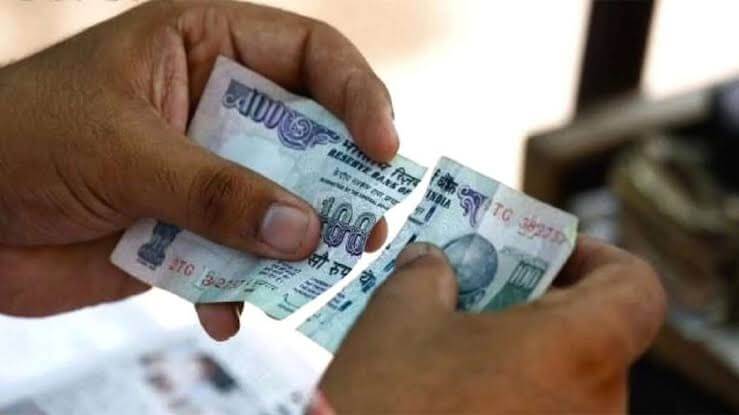
According to the RBI Currency Exchange Rules, such damaged notes still have value and can be exchanged for new notes.
RBI has divided damaged notes into two types:
- Soiled Notes
- Mutilated Notes
According to RBI regulations, it is simple to exchange both of these notes, and no one can refuse to do so.
What exactly are soiled notes?
Notes that have been cut, torn into two pieces, or have become dirty are considered soiled and can be exchanged if the cuts do not pass through the number panels. These can be exchanged at any public sector bank branch, currency chest branch of a PSB, or RBI issue office.
Individuals are not required to pay for this if the number of notes presented is limited to 20 with a maximum value of ₹5,000 per day. As a result, notes can be freely exchanged over the counter. However, service charges are imposed when an individual exceeds the limit. Although the bank will accept notes against receipt in this case, the value may not be credited the same day.
What are multilated notes?
A mulltilated note is one that is made up of more than two pieces or that has a portion missing. The RBI determines the refund value of these notes.
These notes can be exchanged at the same counters as well. Non-chest branches are normally required to adjudicate them and pay the refund value over the counter.If this number exceeds 5 and the value exceeds ₹5,000, the tenderer should send mutilated notes to a nearby chest branch by insured mail, providing the person’s bank details, or have them exchanged there and then.
Exchange Rule Exceptions
- Extremely damaged, burnt, brittle, disfigured, or inseparably pieced together notes are subjected to a special procedure and will not be accepted by banks.
- Notes with religious or political slogans cease to be legal tender and are thus not exchangeable.