Digital rupee launched in India on December 1st
The Reserve Bank of India (RBI) has now announced that retail users will be able to use Central Bank Digital Currency (CBDC), a digital version of currency notes, beginning on December 1.
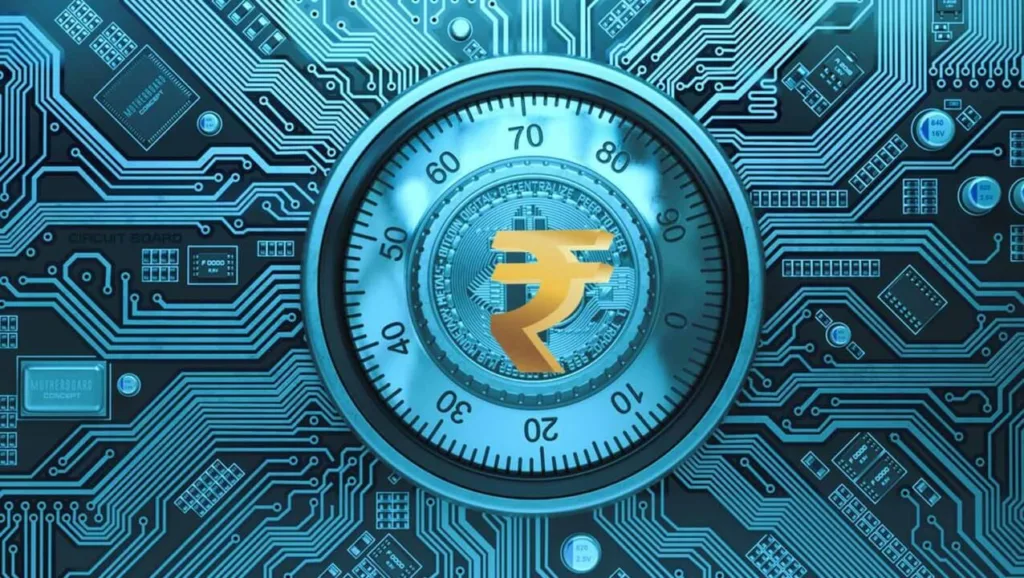
The bank will first begin testing the viability of the entire creation, distribution, and retail usage of digital rupees in real time by launching the retail digital rupee (e-R) pilot. As a result, the bank will be better able to test the program’s architecture in subsequent pilots and address any flaws that were discovered in the initial pilot, if any.
The first pilot run will take place in a few locations and with a closed user group (CUG) made up of participating customers and business owners.
In the Union Budget that was presented to the Parliament on February 1, 2022, the government announced that Central Bank Digital Currency (CBDC) would begin to be used beginning in FY 2022–2023 It anticipates that by lowering the operational expenses associated with physical cash management, CBDC will contribute to strengthening India’s economy.
According to the government, CBDC will also increase financial inclusion, resilience, efficiency, and innovation in the payments system. It is claimed to bring innovation to the cross-border payments industry and enhance the current settlement system.
The use of the offline feature in CBDC would also be advantageous in isolated areas and provide availability and resilience advantages when mobile service or electricity are not available, according to the press release from RBI.
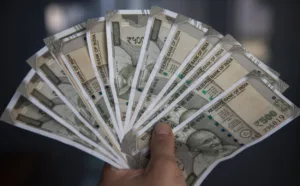
CBDC is described by RBI as digitally issued legal tender by a central bank. It can be viewed as a digital representation of real money. CBDC is convertible into existing currency and is recognised as a form of payment, legal tender, and a secure place to store value.
The e₹-R would take the shape of a digital token and be distributed in the same denominations as coins and paper money currently are. It would be distributed by banks, which would serve as intermediaries. Users will be able to conduct transactions with e₹-R using a digital wallet provided by these banks, which must be kept on mobile phones or other portable devices.
Both person-to-person (P2P) and person-to-merchant transactions are possible (P2M). QR codes that are displayed at retail locations can be used to make payments to merchants.
Eight banks have signed on with the RBI to take part in this pilot project in stages. Four banks—State Bank of India, ICICI Bank, Yes Bank, and IDFC First Bank—will start the first phase in four different Indian cities. Following this pilot, four additional banks—Bank of Baroda, Union Bank of India, HDFC Bank, and Kotak Mahindra Bank—will participate.
The pilot would initially be available in four cities – Mumbai, New Delhi, Bengaluru and Bhubaneswar and later extend to Ahmedabad, Gangtok, Guwahati, Hyderabad, Indore, Kochi, Lucknow, Patna and Shimla.
Also Read
- How Shantanu Naidu became Ratan Tata’s assistant
- Kunal Shah, the CEO of CRED, talks about how much he makes and why
- Zomato stops offering its 10-minute delivery option
- Invest Rs 2,130 monthly in THIS LIC Policy and get Rs 48,500,000
Follow us on Instagram to be updated with latest trends: www.instagram.com/moneyscaler